Texas ACA Open Enrollment Guide
Health insurance enrollment deadlines can be confusing, especially for individuals who are purchasing coverage on their own for the first time. Understanding when you can enroll, when Special Enrollment Periods may apply, and what information you’ll need can help make the process significantly easier.
The Affordable Care Act (ACA) provides Texans with opportunities to enroll in comprehensive health insurance coverage through the Health Insurance Marketplace. Knowing the enrollment rules and timelines can help you avoid coverage gaps and ensure you have access to healthcare when you need it.
This guide explains how Open Enrollment works in Texas, when Special Enrollment Periods may be available, what documentation applicants commonly need, and how to enroll in ACA coverage.
Understanding ACA Open Enrollment Dates in Texas
For most Texans, the annual Open Enrollment Period is the primary opportunity to enroll in ACA Marketplace coverage. During Open Enrollment, eligible individuals and families can:
- Enroll in a new health insurance plan
- Change existing coverage
- Review available plan options
- Update household information
- Reevaluate subsidy eligibility
For HealthCare.gov, Open Enrollment currently runs from November 1 through January 15 each year. Enroll in or change plans by December 15 and pay the first premium for coverage to begin January 1. Enroll from December 16 through January 15 and pay the first premium for coverage to begin February 1. Verify dates before each plan year because federal deadlines can change.
During Open Enrollment, eligible consumers can submit or update a Marketplace application, enroll in a plan, renew or change coverage, and receive a current eligibility determination for potential savings. Existing enrollees should update projected income and household information and compare the current plan with available alternatives. Premiums, provider networks, formularies, benefits, and premium tax credits can change, and some consumers may be automatically re-enrolled.
For a broader overview of ACA coverage options, visit our Obamacare & ACA Health Insurance in Texas page.
ACA Special Enrollment Periods in Texas
Missing Open Enrollment does not always mean you must wait until the next enrollment cycle to obtain coverage.
Outside Open Enrollment, a consumer may enroll in or change Marketplace plans only after receiving an SEP eligibility determination. Depending on the SEP type, the enrollment window is usually 60 days before or 60 days after the qualifying event; loss of Medicaid or CHIP currently provides 90 days after coverage ends. Medicaid and CHIP applications are accepted year-round. Eligibility, deadlines, permitted plan changes, effective dates, and documentation requirements depend on the event.
An approved SEP may allow eligible household members to enroll in or change Marketplace coverage. The specific household members and plans available depend on the qualifying event and the Marketplace eligibility results. Income, address, and household information should be updated whenever it changes; reporting a change does not by itself guarantee an SEP.
Because Special Enrollment opportunities are generally limited in duration, acting promptly after a qualifying event is important.
Qualifying Life Events for Special Enrollment Periods
Events that may create SEP eligibility include loss of qualifying coverage; marriage; birth, adoption, or foster-care placement; certain changes in residence; and certain changes in household or eligibility status. Conditions apply. Divorce generally creates an SEP when it causes loss of coverage. A move may require a change of residence and proof of qualifying coverage during the prior 60 days, subject to exceptions. Voluntarily dropping coverage or losing it for nonpayment generally does not create an SEP. Complete or update a Marketplace application for an event-specific determination.
Because every situation is different, reviewing your circumstances carefully can help determine whether Special Enrollment opportunities are available.
Required Documentation to Apply for ACA Coverage in Texas
When applying for Marketplace coverage, applicants may be asked to provide documents that verify information included in their application.
The application requests household, projected income, tax, identity, and other-coverage information. People applying for coverage generally provide a Social Security number if they have one; a non-applicant tax filer may also need to provide one when tax information is used to determine savings. Immigration documentation is requested only for applicants who need to establish eligible status. The Marketplace may later request documents to confirm income, citizenship, immigration status, identity, or SEP eligibility. Submit only the items listed in the Marketplace notice by its deadline; SEP confirmation is generally due within 30 days after plan selection.
Providing complete and accurate information can help avoid delays during the enrollment process. If additional documentation is requested, responding promptly may help ensure your application continues moving forward without unnecessary interruptions.
How to Enroll in an ACA Healthcare Plan in Texas
Applying for ACA coverage generally follows a straightforward process. Understanding the steps involved ahead of time can help make enrollment easier and allow you to compare available options more effectively.
Step 1: Gather Your Information
Before applying, gather projected annual household income, tax-filing status, spouse and dependent information, Social Security numbers for applicants who have them, immigration information for applicants who need it, and details about current or offered employer and government coverage. Provide accurate information, but do not send verification documents unless the Marketplace application or notice requests them
Step 2: Complete an Application
Complete the application through HealthCare.gov or an approved Marketplace enrollment pathway. The Marketplace determines eligibility for Marketplace enrollment, advance payments of the premium tax credit, cost-sharing reductions, and possible Medicaid or CHIP coverage. Eligibility depends on projected annual household income, tax-family information, citizenship or immigration status, and access to other qualifying coverage. Respond to any verification request by the deadline in the notice.
Because financial assistance is based on the information submitted, accuracy is important throughout the application process.
Step 3: Review Available Plans
After eligibility has been determined, applicants can review the plans available in their area. Many consumers compare options based on factors such as:
- Monthly premiums
- Deductibles
- Copayments
- Provider networks
- Prescription drug coverage
- Out-of-pocket maximums
Taking time to evaluate multiple options can help you identify coverage that aligns with both your healthcare needs and your budget. To learn more about available coverage options, visit our Texas Obamacare Plans page.
Step 4: Review Subsidy Eligibility
Many Texans qualify for premium tax credits and other forms of financial assistance that help lower healthcare costs.
Review the Marketplace Eligibility Determination Notice for potential advance payments of the premium tax credit and cost-sharing reductions. Eligible consumers may choose to use all, some, or none of the estimated premium tax credit in advance. Cost-sharing reductions lower deductibles, copayments, coinsurance, and the out-of-pocket maximum only when an eligible consumer selects a Silver plan.
Learn more about financial assistance on our Texas ACA Subsidies page.
Step 5: Select Coverage
After reviewing available plans and financial assistance options, applicants can select the coverage that best fits their needs.
Some individuals prioritize lower monthly premiums, while others focus on provider access, prescription coverage, or reducing out-of-pocket healthcare costs. Evaluating anticipated healthcare usage can help guide this decision.
Step 6: Complete Enrollment
Coverage generally becomes effective after enrollment requirements have been completed and applicable deadlines have been met.
Once enrollment is finalized, it is important to retain confirmation notices, plan documents, and other enrollment records. Understanding when coverage begins can help prevent unexpected gaps in healthcare protection.
Frequently Asked Questions
HealthCare.gov Open Enrollment currently runs November 1–December 15. Enroll by December 15 and pay the first premium for January 1 coverage. Verify the current dates each year.
After December 15, Marketplace enrollment or plan changes generally require an SEP eligibility determination. Depending on the SEP type, the window is usually 60 days before or 60 days after the event; people losing Medicaid or CHIP currently have 90 days after coverage ends. Some events permit advance enrollment, while others have different effective-date and documentation rules. Medicaid and CHIP applications are accepted year-round.
The amount of time available can vary depending on the qualifying event and Marketplace requirements. Because Special Enrollment opportunities are often limited, beginning the enrollment process as soon as possible is generally the best approach.
Required Document requirements depend on the application and any inconsistency or SEP the Marketplace needs to confirm. Follow the Marketplace notice rather than submitting a generic packet. Outside Open Enrollment, a consumer can change Marketplace plans only after qualifying for an SEP, and the event may limit which household members or plans can change. Report income, address, household, or other-coverage changes even when they do not create an SEP.documents vary by applicant but commonly include information related to income, identity, residency, household composition, and tax filing status. Additional documentation may be requested depending on your circumstances.
Most plan changes occur during Open Enrollment. However, qualifying life events may create eligibility for a Special Enrollment Period that allows you to enroll in new coverage or make changes outside the standard enrollment window.
Get Help Understanding ACA Enrollment
in Texas
Enrollment deadlines, subsidy eligibility, Special Enrollment Periods, and plan comparisons can sometimes feel overwhelming. MBhealth helps Texans understand their enrollment options, evaluate available coverage, compare plans, and navigate the Marketplace with greater confidence.
Contact MBhealth today to learn more about ACA enrollment opportunities in Texas and explore health insurance coverage options that fit your healthcare needs and budget.
STATE LICENSURE
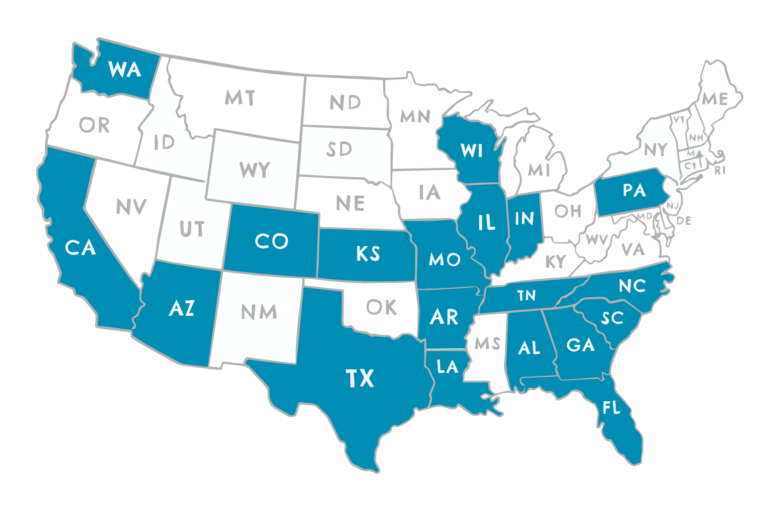
MBhealth is licensed in the following states:
- Alabama
- Arizona
- Arkansas
- California
- Colorado
- Florida
- Georgia
- Illinois
- Indiana
- Kansas
- Louisiana
- Missouri
- North Carolina
- Pennsylvania
- South Carolina
- Tennessee
- Texas
- Washington
- Wisconsin